
Biography
Prof. Martyn Percy is a British academic, theologian, social scientist, and Anglican priest. He served as the 45th Dean of Christ Church, Oxford (2014-2022), and as Principal of Cuddesdon College (Oxford) from 2004 to 2014. Percy is widely known for his theological contributions to the field of ecclesiology and his studies of contemporary Christianity. Since 2022, he has held academic positions in Asia, Europe, and the United States.
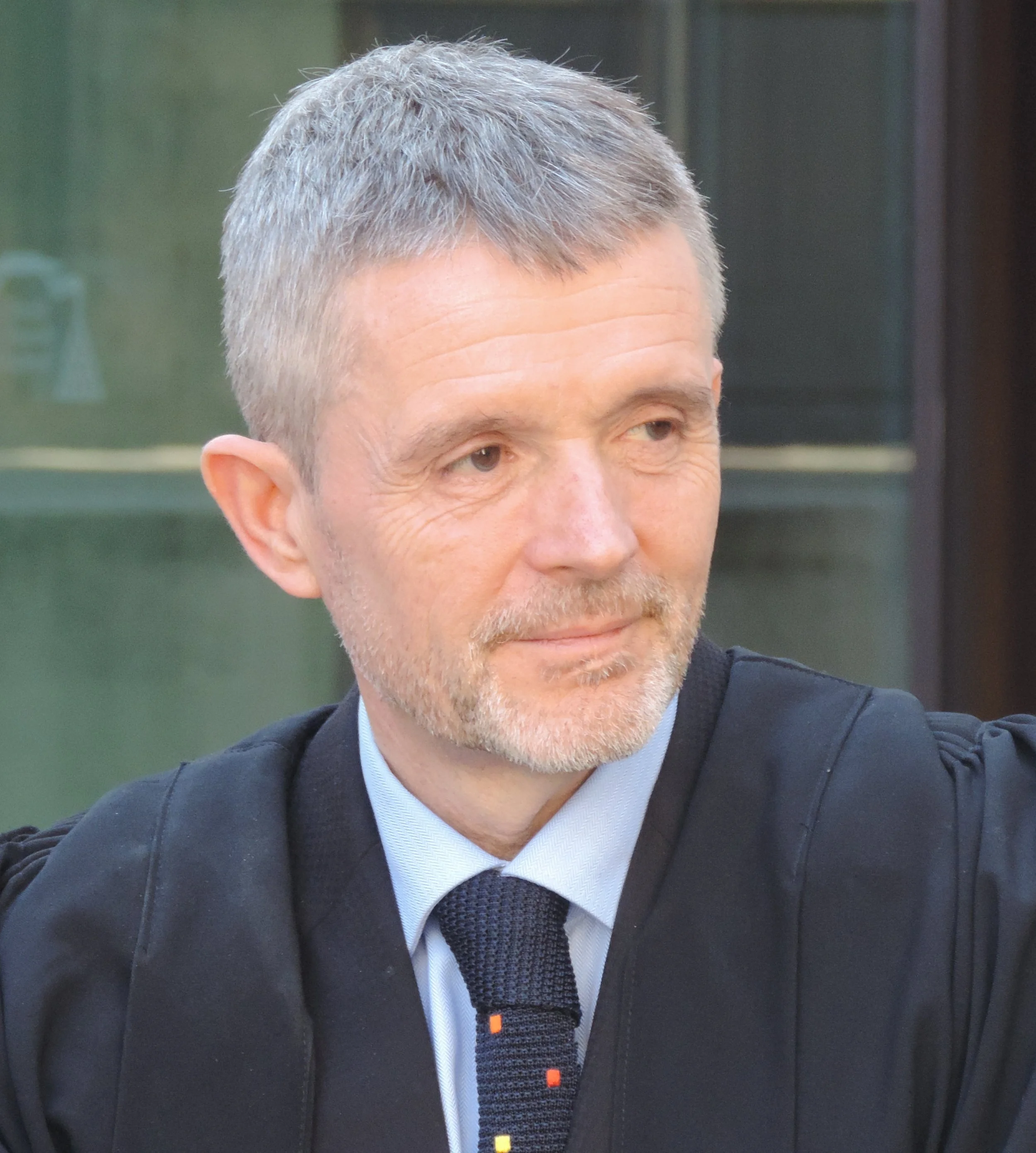
-
Percy earned a Bachelor of Arts degree from the University of Bristol (1984), a Master of Education from the University of Sheffield, and a PhD in theology from King’s College London in 1993. His doctoral thesis, titled Signs, Wonders and Church Growth, was subsequently published. He trained for ordination at St. John’s College, Cranmer Hall, Durham University, from 1988-1990.
Prior to academic life and ordination, from 1984-1988, Percy worked in the book publishing industry, specialising in developing new lists, public relations, marketing, and acquisitions.
Percy was ordained as deacon in the Church of England in 1990 and as a priest in 1991. He served as Chaplain and Director of Studies at Christ's College, Cambridge, before becoming founding director of the Lincoln Theological Institute (Manchester).
-
From 2004 to 2014, Percy was Principal of Cuddesdon, an Anglican theological college near Oxford. During his tenure, the college expanded significantly by incorporating the Oxford Ministry Course and the West of England Ministerial Training Course, becoming the largest centre for Anglican ordination training in the UK at that time. Percy also oversaw the construction of the Bishop Edward King Chapel and a new education centre, Harriet Monsell House. Under his leadership, the college moved from a liberal catholic ethos to a more theologically broad and centrist position within the Church of England.
-
In 2014, Percy was elected Dean of Christ Church, Oxford, a unique role that combined leadership of both the college and the cathedral. He was the first dean to be democratically elected by the governing body. As Dean, he also served as the senior priest in the Diocese of Oxford.
During his tenure, Percy advocated for reforms in order to modernise the governance of the college. However, his attempts at restructuring were strongly resisted, and in November 2018, Percy was suspended over the ensuing governance disputes with dons at Christ Church. He subsequently faced internal tribunal charges, all of which were dismissed by a High Court judge in August 2019. A separate safeguarding investigation in 2020 likewise found no evidence of misconduct. In early 2022, following mediation, Percy left Christ Church. The college announced a settlement, and he vacated office in April that year. In November 2022, the UK Charity Commission issued a formal warning to Christ Church regarding its handling of disputed funds and appointed an Independent Reviewer to examine governance structures, as Percy had requested.
-
Since leaving Christ Church, Percy has held several academic appointments. In 2023, he became Professor of Religion and Culture at the University of Saint Joseph in Macao. He also holds positions as Honorary Provost-Theologian at Ming Hua Theological College in Hong Kong, Honorary Canon Theologian for the Convocation of Episcopal Churches in Europe, and Research Professor at the Institut für Christkatholische Theologie, Theologische Fakultät, Universität Bern, Switzerland.
-
Percy’s theological perspective is rooted in ‘generous orthodoxy’, reflecting a commitment to a broad, liberal Anglican tradition. He has written extensively on ecclesiology, religious movements, congregational life, and spiritual devotion. While supporting progressive stances on social issues such as LGBTQ inclusion and the ordination of women, Percy also affirms traditional Christian teachings on doctrines such as the incarnation, atonement, resurrection, and ascension.
Percy is regarded as a key founder in the emerging field of Critical Ecclesiology. This suburb of contextual theology draws on grounded theory, practical and pastoral theology, liberation theologies, ethnography and congregational studies, anthropology and sociology, with cultural and social theory.
Critical Ecclesiology is concerned with issues of power, authority, identity, fidelity, futures, integrity, governance, practice, mission, dissonance, institutional structures, organisational practices, cultures and cultural theory in ecclesial polity. Unlike most of the work in congregational studies, Critical Ecclesiology draws broadly on the hybridity of theology and social theory to focus on denominational and macro-structures within ecclesial polity and practice. Percy’s recent work has focused on the legacy of the British Empire and colonialism in Anglican polity, paying attention to classism and racism.
Percy has written extensively on issues of church leadership, safeguarding, and institutional governance in denominations. He has been critical of managerial approaches to church leadership that alienate congregations and the wider public. He has advocated for fully independent oversight and professional regulatory scrutiny of safeguarding procedures in the Church of England and has been involved in efforts to reassess the church’s handling of historical abuse cases. He was also among the public voices calling for a more inclusive church approach to gender and sexuality – and supported the ordination of women as bishops.
Percy has the distinction of being the only living theologian named and quoted in Dan Brown’s The Da Vinci Code (chapter 55), where Sir Leigh Teabing says, “Everything you need to know about the Bible can be summed up by the great canon doctor Martyn Percy: ‘The Bible did not arrive by fax from heaven.’”
The journal Theology describes Percy as “the British Theologian closest to being a missionary anthropologist”. The multi-contributor book Reasonable Radical? Reading the Writings of Martyn Percy (Ian Markham and Joshua Daniel, 2017) focuses on Percy's theology. Percy’s work, recognised as helping to establish the field of Critical Ecclesiology as a discrete suburb within the conurbation of theology,religious studies and social theory, is addressed in other works. Sacred Trust: A Theology of Credibility (Stephen Morgan, Routledge - forthcoming), and Critical Ecclesiology (Daniel Warnke & Johnny Douglas, SPCK - forthcoming) deal more extensively with his work in the field.
The Northern Irish poet Peter McDonald’s Five Psalms for Martyn Percy reworks Psalms 8, 25, 94, 98 and 114 in poetic form to explore aspects of Percy's life using elegy, lament, hope, justice and vindication. Percy is also commended in Adam Sisman’s The Professor and the Parson for his role in unmasking a notorious serial fraudster working in both the church and higher education.
-
In addition to his academic and ecclesiastical work, Percy has contributed to several public and regulatory bodies. He served on the Advertising Standards Authority, the Portman Group’s Independent Complaints Panel (regulating alcohol marketing), and the Direct Marketing Authority. He has also advised the British Board of Film Classification and participated in higher education research assessment exercises.
-
Percy is married to Emma Percy, a theologian and ordained Anglican priest. They have two sons. Percy is a member of the Labour Party, a teetotaler and a lifelong supporter of Everton Football Club.
His hobbies include running, playing squash, cinema, and listening to jazz.